
Hajj 2027 Health Requirements: Which Vaccinations Are Mandatory for Entry into Saudi Arabia?
Navigating the medical rules for Hajj can be more stressful than the pilgrimage itself. Here is exactly what you need to get injected, when to do it, and how to prove it to Saudi authorities.
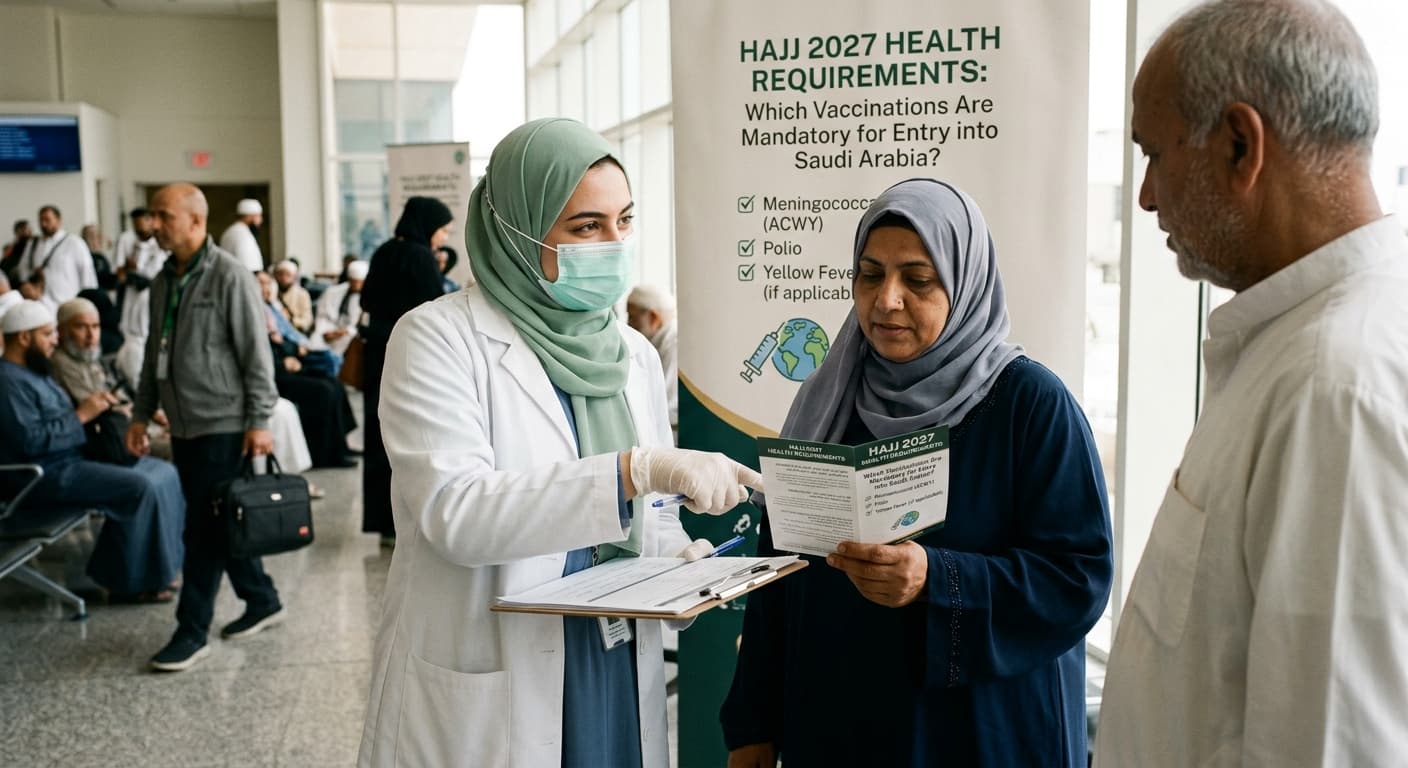
Booking your flight and securing your visa are the logistics of the journey, but meeting the medical criteria is what actually gets you through the border. If you don't have the right stamps in your International Certificate of Vaccination, you aren't getting past immigration. Navigating the Hajj health requirements is a matter of strict timing and specific vaccine types. You cannot afford to get this wrong ten days before your flight.
The Saudi Ministry of Health updates its requirements annually, and for 2027, the focus remains on preventing outbreaks in high-density environments. This isn't just about your safety; it's about the collective health of millions. You are required to prove you aren't carrying specific pathogens into the Kingdom, and "forgetting" a booster is not an excuse the authorities accept.
Understanding the Hajj health requirements for 2027
The core of the medical entry protocol is the quadrivalent meningococcal vaccine. According to emro.who.int, all travellers aged 1 year and older, from all countries, must receive a quadrivalent meningococcal vaccine. This covers the A, C, Y, and W-135 strains. If your doctor offers you a "meningitis shot" that only covers strain B, it is useless for Hajj entry. You must verify that the ACYW strains are listed on your certificate.
Timing is the most common failure point for Hajj health requirements. You must receive this vaccination no less than 10 days before you arrive in Saudi Arabia. If you get the shot eight days before you land, your certificate is technically invalid. The Saudi officials look at the date of administration and the date of entry. If that gap is less than ten days, you risk being quarantined or turned back at your own expense.
There is also a distinction between the types of meningococcal vaccines that affects how long your paperwork is good for. You need to know which one you are getting:
Conjugate Vaccine: Valid for 5 years. This is the preferred version because it provides longer-lasting immunity and better protection in the throat.
Polysaccharide Vaccine: Valid for 3 years. If you received this shot for a previous Hajj or Umrah, check the date. If it was more than three years ago, you need a fresh dose.
Your vaccination certificate must clearly state whether the vaccine given was conjugate or polysaccharide to avoid confusion at the border.
The Yellow Fever trap for transiting pilgrims
Yellow fever is a specific requirement that catches many people off guard, particularly those flying from or through Africa and South America. Per the cdc.gov, proof of vaccination against yellow fever is required for all pilgrims arriving from yellow fever–endemic countries. This sounds simple, but the "transit rule" is where the danger lies.
If you are transiting through an airport in a yellow fever-risk country for more than 12 hours, you are legally required to have the vaccination certificate. Many pilgrims book long layovers in Ethiopia, Kenya, or Brazil to save money on airfare. If that layover exceeds 12 hours, you have effectively triggered the requirement for a yellow fever shot. Without it, you won't be allowed to board your connecting flight to Jeddah or Madinah. The vaccine must be administered at least 10 days before entry and is now considered valid for life by the WHO, though Saudi officials still prefer to see it recorded in an International Certificate of Vaccination (the "Yellow Book").
Polio vaccination requirements for specific regions
Poliomyelitis hasn't been eradicated everywhere, and Saudi Arabia is aggressive about keeping it out. If you are arriving from a country where polio is still endemic—or even where there is a risk of re-introduction—you must provide proof of vaccination. This applies regardless of your age. Adults need this just as much as children do.
The standard requirement is a dose of Oral Polio Vaccine (OPV) or Inactivated Polio Vaccine (IPV) within the last 12 months, and at least 4 weeks before arrival. If you are coming from a high-risk area, you might even be given an additional dose of OPV at the border, regardless of your previous vaccination status. Do not argue with the health officers at the airport; this is a mandatory part of the entry protocol for specific nationalities.
When you are gathering your What Documents Do You Actually Need for Hajj 2027 Registration in Pakistan?, the medical certificate is often the hardest to secure. You cannot leave this to the last minute because some vaccines, like the polio or yellow fever shots, may have supply issues at local clinics. You should be looking for these doses at least two months before your departure date.
The seasonal and recommended list
While the Saudi Ministry of Health regulations emphasize the mandatory shots, they also "strongly recommend" others. In the context of Hajj, "strongly recommended" often functions as "practically mandatory." For instance, the seasonal influenza vaccine is technically recommended, but if you arrive with a severe cough and no proof of a flu shot, you are going to face much more scrutiny from health screenings at the airport.
The flu spreads like wildfire in the tents of Mina. You should get the 2027 seasonal flu shot at least two weeks before you travel. For pilgrims from the Northern Hemisphere, this means ensuring you have the latest formulation. Saudi authorities also recommend being up to date on COVID-19 vaccinations. While the strict mandates of the early 2020s have eased, having your QR code ready on your national health app or the Sehaty app is still a smart move. It simplifies your health screening and avoids unnecessary delays.
Vaccine | Requirement Status | Validity/Timing |
|---|---|---|
Meningococcal ACYW | Mandatory for all | 10 days before entry; 3 years (Poly) or 5 years (Conj) |
Yellow Fever | Mandatory for endemic/transit | 10 days before entry; Lifetime validity |
Polio (OPV/IPV) | Mandatory for risk areas | 12 months validity; 4 weeks before entry |
Seasonal Influenza | Strongly Recommended | 2 weeks before travel; Latest seasonal strain |
COVID-19 | Recommended | Up-to-date as per home country rules |
Anyway. Let’s talk about the physical reality of these shots. You are going to be in a crowd of two million people. The Hajj health requirements aren't just bureaucratic hurdles; they are your primary defense against a ruined trip. Getting sick in the middle of Hajj doesn't just mean staying in bed; it means missing the standing at Arafat, which is the essence of the pilgrimage.
Digital verification and the Nusuk portal
The days of carrying a tattered piece of paper as your only proof are ending. Saudi Arabia has moved toward digital health integration. Most pilgrims will need to upload their vaccination data through the Nusuk platform or ensure it is linked via the Sehaty app. This is the part that actually matters: if the system doesn't show you as "Immune" or "Vaccinated," your visa might not even be issued.
If you are following the How to Register for Hajj 2027 in Pakistan Complete Step-by-Step Guide, you will notice that health verification is a prerequisite for the final approval. You must ensure that the name on your vaccination certificate matches your passport exactly. A middle name included on one but not the other can cause a digital mismatch that takes weeks to fix through embassy channels.
Always carry the original International Certificate of Vaccination (the yellow booklet) in your hand luggage, even if you have uploaded everything digitally. Systems fail, but the physical stamp from a registered clinic is the ultimate fallback. If a Saudi officer asks for proof and your phone is dead or the app won't load, that yellow book is your only way into the country.
What about medical exemptions?
If you have a legitimate medical reason why you cannot receive a specific vaccine—such as a severe allergy to egg proteins (often found in flu and yellow fever shots) or an immunocompromised state—you cannot just show up and explain it at the window. You need a formal letter of exemption. This must be on official letterhead from a recognized health authority in your home country, and it often needs to be legalized by the Saudi Embassy before you travel.
Even with an exemption, be prepared for extra screening. The Saudi Ministry of Health regulations are designed to protect the majority. If you are exempt from a mandatory vaccine, you might be required to wear a mask at all times or stay in specific monitored zones. It is rare for exemptions to be granted for the meningococcal vaccine because it is so vital to preventing outbreaks.
Health risks beyond the needle
Meeting the Hajj health requirements involves more than just shots. You need to consider the blood-borne disease risks associated with the ritual head-shaving (Halq). Every year, people get infected with Hepatitis B or C because they use unlicensed barbers who reuse blades. Only use official barbers at the designated stations in Mina. They are required to use single-use, disposable blades. If you see a barber "cleaning" a blade with a cloth instead of opening a new packet, walk away immediately.
Physical fitness is the unspoken health requirement. You will likely walk 10 to 15 kilometers a day in heat exceeding 40 degrees Celsius. If you haven't started a walking regimen three months before your flight, no vaccine will save you from heat exhaustion. Start walking in the shoes you plan to wear during the non-Ihram portions of the trip. Blisters lead to infections, and infections lead to the clinic instead of the Kaaba.
One final note on the Hajj health requirements: don't assume your local GP knows the Saudi rules. They might look at a general travel database that hasn't been updated in six months. Always cross-reference your doctor’s advice with the official circulars from the Saudi Ministry of Health. It is your pilgrimage on the line, not theirs. Get the shots, get the stamps, and get them early enough that you can recover from any minor side effects before you board that plane.
Frequently Asked Questions
Which vaccines are strictly mandatory for Hajj entry into Saudi Arabia?
The quadrivalent meningococcal (ACYW) vaccine is mandatory for all pilgrims. Depending on your country of origin or transit, yellow fever and polio vaccinations are also strictly required for entry.
How many days before traveling to Hajj must the meningitis vaccine be administered?
You must receive the meningococcal vaccine at least 10 days before your arrival in Saudi Arabia. Administering it later may result in entry being denied, as the certificate will not be considered valid.
How long is a quadrivalent meningococcal conjugate vaccine certificate valid for Hajj?
A conjugate vaccine certificate is valid for five years. In contrast, the older polysaccharide vaccine certificate is only valid for three years; you must ensure your certificate clearly states which type you received.
Do travelers transiting through yellow fever-endemic countries need a vaccination certificate for Hajj?
Yes, if you transit for more than 12 hours through an airport in a country at risk of yellow fever, you must present a valid vaccination certificate upon arrival in Saudi Arabia.
Are COVID-19 vaccines still required for all pilgrims entering Saudi Arabia for Hajj?
While Saudi authorities have relaxed many pandemic-era restrictions, they still highly recommend being up-to-date with COVID-19 vaccinations. Requirements can change, so always check the latest Ministry of Health circulars before booking.